The Science Behind Red Light Therapy for Cosmetic Use
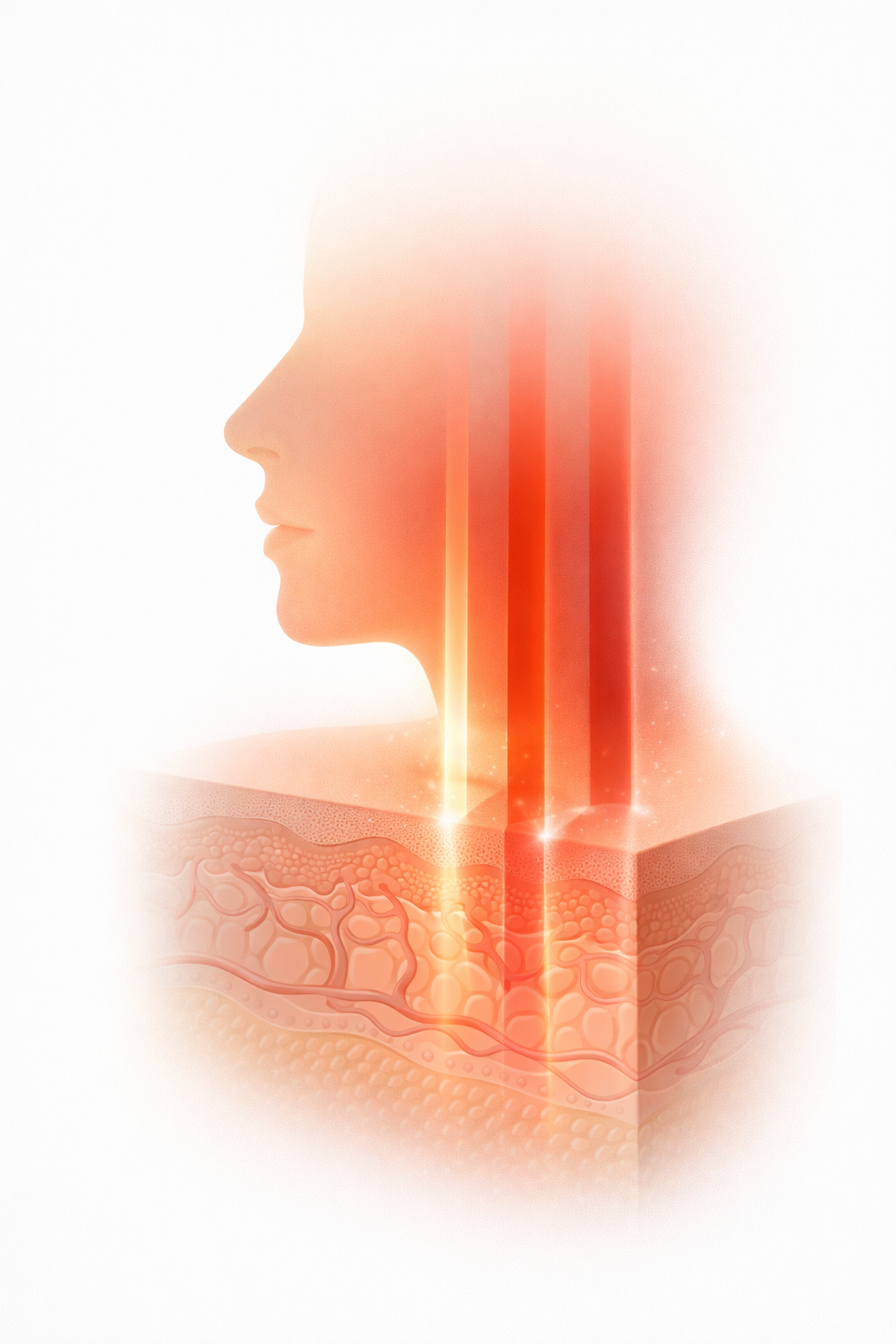
Red light therapy has gained popularity in cosmetic skincare, but what's actually happening at the cellular level? Let's explore the science.
Understanding Light Wavelengths
The Electromagnetic Spectrum
Visible light exists on a spectrum measured in nanometers (nm):
- Red Light: 630-700nm (visible red)
- Near-Infrared (NIR): 700-1000nm (invisible to human eye)
Most cosmetic red light devices use:
- Red: 630-660nm
- NIR: 810-850nm
Why These Wavelengths?
Research suggests these specific wavelengths can penetrate skin tissue and may interact with cellular components, particularly mitochondria—the energy powerhouses of cells.
Cellular Mechanisms
Mitochondrial Response
Mitochondria contain light-sensitive molecules called chromophores. When exposed to red and NIR light, these chromophores may:
- Absorb photon energy
- Potentially increase ATP (cellular energy) production
- Support cellular repair processes
The Photobiomodulation Theory
Photobiomodulation (PBM) refers to the biological response to light exposure. The proposed mechanism:
- Light Absorption: Chromophores in mitochondria absorb photons
- Energy Transfer: Energy may be transferred to cellular processes
- Cellular Response: Cells may respond by:
- Increasing energy production
- Supporting repair mechanisms
- Reducing oxidative stress
What Research Suggests
Skin Appearance Studies
Some studies have explored red light therapy for cosmetic applications:
- Collagen Production: Some research suggests potential support for collagen synthesis
- Skin Texture: May support improvements in skin texture and appearance
- Recovery: May support skin recovery processes
Important Note: Most research has been conducted in controlled settings. Individual results vary, and these devices are for cosmetic use only.
Limitations of Current Research
- Many studies use professional-grade equipment
- Results vary significantly between individuals
- Long-term effects need more research
- Most studies focus on specific conditions, not general cosmetic use
How Devices Work
LED vs. Laser
LED (Light Emitting Diodes):
- Broader light spread
- Lower intensity
- Suitable for home use
- Multiple wavelengths possible
Laser:
- Focused, intense beam
- Higher power
- Typically professional use
- Single wavelength
Most at-home devices use LED technology for safety and ease of use.
Power and Intensity
- Power Density: Measured in mW/cm² (milliwatts per square centimeter)
- Energy Density: Total energy delivered (J/cm²)
- Treatment Time: Duration affects total energy delivered
Formula: Energy = Power × Time
Penetration Depth
How Deep Does Light Go?
- Red Light (630-660nm): Penetrates approximately 1-2mm
- NIR (810-850nm): Penetrates deeper, up to 3-5mm
This is why NIR is often included in devices—it may reach deeper skin layers.
Safety Considerations
Why Red Light is Generally Safe
- Non-ionizing: Unlike UV light, red/NIR doesn't damage DNA
- Low heat: Properly designed devices don't significantly heat tissue
- No known harmful side effects when used as directed for cosmetic purposes
Important Safety Notes
- Use eye protection if recommended
- Follow manufacturer guidelines
- Don't use on photosensitive skin without professional consultation
- These are cosmetic devices, not medical treatments
Realistic Expectations
What Science Supports
- Red light may support cellular processes
- Some users report improved skin appearance
- Generally safe for cosmetic use when used properly
What Science Doesn't Guarantee
- Specific results for every individual
- Medical treatment capabilities
- Instant or dramatic changes
- Replacement for professional treatments
The Placebo Effect
It's worth noting that some perceived benefits may be due to:
- Improved skincare routine consistency
- Better hydration and care habits
- Positive psychological effects
- Combination with other skincare products
This doesn't invalidate the experience—consistent care routines often yield results regardless of mechanism.
Best Practices Based on Science
Optimal Parameters (General Guidelines)
- Wavelength: 630-660nm (red) and/or 810-850nm (NIR)
- Distance: As recommended by manufacturer
- Duration: 10-20 minutes per session
- Frequency: Daily to several times per week
- Consistency: More important than intensity
What Matters Most
- Consistency over intensity
- Proper distance from device
- Adequate treatment time
- Regular use over weeks/months
- Combined with good skincare habits
The Bottom Line
The science behind red light therapy suggests potential mechanisms for supporting skin appearance through cellular processes. However:
- Results vary between individuals
- Devices are for cosmetic use only
- More research is needed
- Consistency and proper use matter most
- These are not medical treatments
Understanding the science helps set realistic expectations while appreciating the potential benefits. Always prioritize safety and consult professionals when needed.
Remember: These devices are cosmetic tools, not medical devices. Consult healthcare professionals for medical skin concerns.