How to Choose the Right Red Light Device for Your Goals
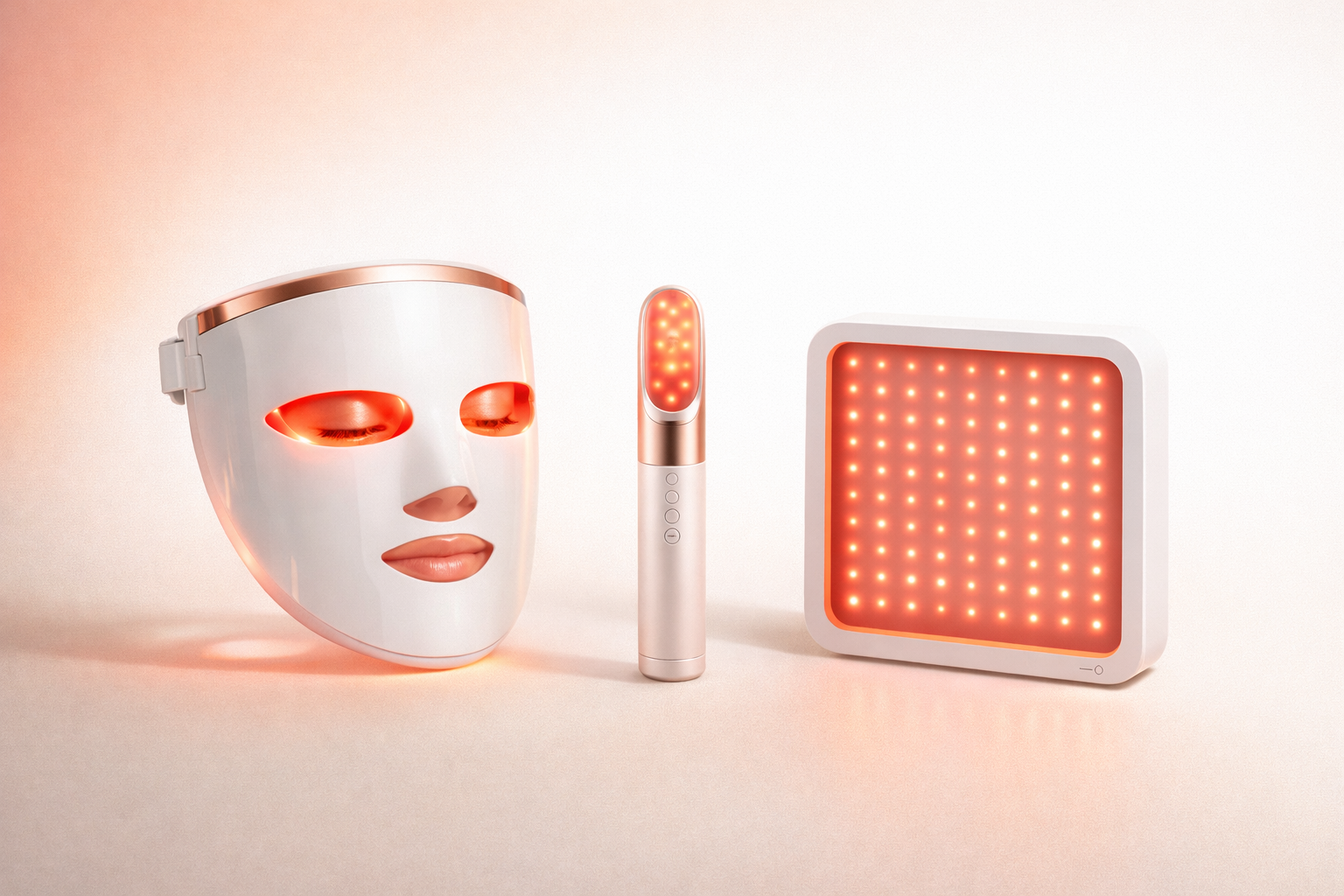
With so many red light devices available, choosing the right one can feel overwhelming. Here's how to find the perfect match for your needs.
Understanding Your Options
Device Types
LED Face Masks:
- Covers full face
- Hands-free operation
- Portable and convenient
- Good for consistent daily use
Handheld Wands:
- Targeted treatment
- Portable and flexible
- Manual operation required
- Good for specific areas
Panels:
- Larger coverage area
- Can treat face and body
- Typically wall-mountable
- Higher power output
Combination Devices:
- Multiple wavelengths
- Various treatment modes
- More versatile
- Often higher price point
Key Factors to Consider
1. Wavelengths
Red Light (630-660nm):
- Penetrates 1-2mm
- Good for surface-level support
- Visible red light
- Most common in devices
Near-Infrared (810-850nm):
- Deeper penetration (3-5mm)
- May reach deeper skin layers
- Invisible to human eye
- Often combined with red
Multi-Wavelength:
- Multiple colors/wavelengths
- More versatile
- May offer different benefits
- Typically more expensive
Recommendation: Look for devices with both red and NIR wavelengths for comprehensive coverage.
2. Power and Intensity
Power Density (mW/cm²):
- Higher isn't always better
- Follow manufacturer recommendations
- Too high can be uncomfortable
- Too low may be less effective
Energy Delivery:
- Total energy = Power × Time
- Longer sessions can compensate for lower power
- Consistency matters more than intensity
Recommendation: Choose a device with adjustable intensity if possible, allowing you to start low and increase as needed.
3. Coverage Area
Face-Only Devices:
- Masks and smaller panels
- Focused on facial treatment
- More affordable
- Good for beginners
Full-Body Options:
- Larger panels
- Can treat multiple areas
- Higher investment
- More versatile long-term
Recommendation: Start with face-focused if budget-conscious; consider full-body if you want versatility.
4. Convenience and Usability
Hands-Free:
- Masks with straps
- Wall-mounted panels
- Better for consistency
- Allows multitasking
Handheld:
- More control
- Targeted treatment
- Requires active use
- May be less consistent
Recommendation: Hands-free options often lead to better consistency, which is key for results.
5. Budget Considerations
Entry Level ($50-150):
- Basic LED masks
- Single wavelength
- Good for trying red light
- May have limitations
Mid-Range ($150-400):
- Better build quality
- Multiple wavelengths
- More features
- Good value
Premium ($400+):
- Professional-grade
- Highest power
- Most features
- Long-term investment
Recommendation: Start mid-range if possible—better quality without breaking the bank.
Matching Device to Goals
Goal: Consistent Daily Routine
Best Choice: LED Face Mask
- Easy to use daily
- Hands-free operation
- Quick setup
- Portable if needed
Goal: Targeted Treatment
Best Choice: Handheld Wand
- Precise application
- Flexible use
- Good for specific areas
- Portable
Goal: Face and Body
Best Choice: Panel Device
- Larger coverage
- Versatile use
- Professional-grade power
- Long-term value
Goal: Trying Red Light
Best Choice: Entry-Level Mask
- Lower investment
- Test the concept
- Upgrade later if desired
- Minimal risk
Important Features to Look For
Safety Features
- Timer function - Prevents overuse
- Auto shut-off - Safety mechanism
- Eye protection - Essential for some devices
- Heat management - Should not overheat
Usability Features
- Adjustable straps - Comfortable fit
- Multiple intensity levels - Flexibility
- Rechargeable battery - Convenience
- Easy cleaning - Maintenance
Quality Indicators
- FDA-cleared (if applicable) - Safety tested
- Warranty - Manufacturer confidence
- Customer reviews - Real user feedback
- Company reputation - Support and service
Red Flags to Avoid
Warning Signs
- Unrealistic claims - Medical treatment promises
- No safety information - Missing instructions
- Suspiciously cheap - Quality concerns
- No customer support - Difficult to get help
- Poor reviews - Consistent negative feedback
Questions to Ask
- Does it have proper safety features?
- Are instructions clear and comprehensive?
- Is customer support available?
- What's the warranty policy?
- Are there verified user reviews?
Setting Realistic Expectations
What Devices Can Do (Cosmetic Use)
- Support skin appearance
- May improve texture over time
- Generally safe when used properly
- Convenient at-home option
What They Cannot Do
- Treat medical conditions
- Provide instant results
- Replace professional treatments
- Work without consistency
Making Your Decision
Decision Framework
- Define your goals - What do you want to achieve?
- Assess your space - Where will you use it?
- Consider your routine - Daily or occasional?
- Set your budget - What can you invest?
- Research thoroughly - Read reviews and specs
- Start conservatively - You can always upgrade
Final Checklist
Before purchasing, ensure:
- Device is for cosmetic use (not making medical claims)
- Wavelengths match your goals
- Power/intensity is appropriate
- Safety features are present
- Instructions are clear
- Customer support is available
- Reviews are generally positive
- Budget fits your situation
- You understand proper use
- You're committed to consistency
The Bottom Line
Choosing the right red light device comes down to:
- Your specific goals - What you want to achieve
- Your lifestyle - How it fits your routine
- Your budget - What you can invest
- Quality and safety - Don't compromise here
- Realistic expectations - Consistency matters most
Remember: The best device is the one you'll use consistently. Start with something that fits your life, and you can always upgrade later.
Important: All devices mentioned are for cosmetic use only. Consult healthcare professionals for medical skin concerns. As an Amazon Associate, we earn from qualifying purchases.